











Unlock Your Brain’s Potential: Top Puzzle Browser Games to Sharpen Your Mind
In an age saturated with digital distractions, it’s easy to overlook the profound cognitive benefits that certain online activities can offer. Far from being mere time-wasters, a carefully selected array of puzzle browser games stands as a powerful, accessible, and often overlooked tool for mental enhancement. Imagine engaging in a form of play that simultaneously hones your memory, sharpens your logic, and boosts your problem-solving prowess, all without the hassle of downloads or installations. This isn’t a futuristic dream; it’s the reality offered by an expansive universe of free brain teasers and intricate challenges available directly in your web browser. This article delves deep into how these browser puzzles can truly unlock your brain’s potential, transforming casual leisure into a robust mental workout.
The Neuroscience Behind Brain Games: Why They Work
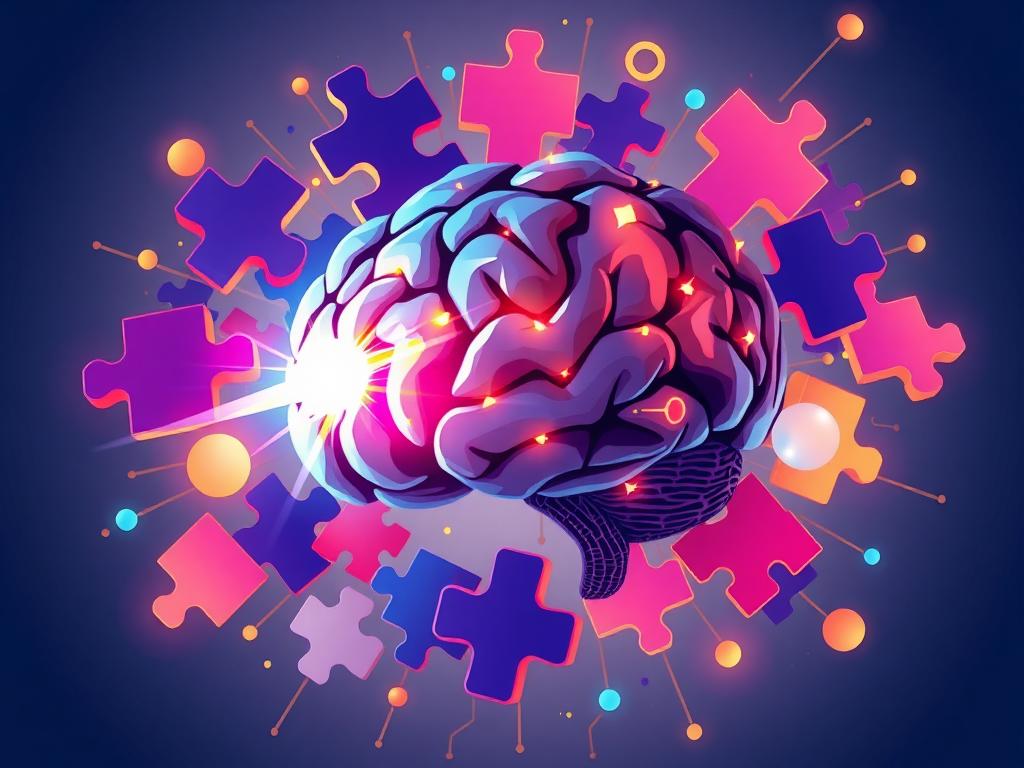
The human brain is an extraordinary organ, capable of remarkable adaptation and growth throughout our lives. This phenomenon, known as neuroplasticity, is the scientific bedrock upon which the efficacy of brain training games rests. Unlike static machinery, our brains continually reorganize themselves by forming new neural connections and strengthening existing ones in response to new experiences and challenges. When you engage with puzzle browser games, you are, quite literally, giving your brain a targeted workout, stimulating specific cognitive functions that lead to tangible improvements.
Consider the core cognitive domains these games often target: memory, attention, problem-solving, and executive functions. Memory, for instance, isn’t a singular entity but a complex interplay of working memory (our ability to hold and manipulate information for short periods), short-term memory, and long-term memory. Games that require you to recall patterns, sequences, or spatial arrangements directly exercise these memory systems. Take a classic memory match game – you’re actively engaging your working memory to remember card positions and their corresponding images. Over time, consistent engagement with such free brain teasers can lead to more efficient memory recall and improved capacity to hold multiple pieces of information simultaneously.
Attention, another critical cognitive function, is constantly under siege in our digital world. Browser puzzles, particularly those with time limits or rapidly changing elements, demand focused attention and quick decision-making. These games train your ability to filter out distractions, concentrate on relevant information, and shift your attention efficiently between tasks. This improved attentional control can translate into better focus during work or study, and a greater capacity to stay present in daily interactions.
Perhaps the most significant benefit of puzzle browser games lies in their ability to enhance problem-solving skills. Whether it’s a number game like 2048, a challenging block puzzle, or a complex logic grid, these games present structured problems that require logical deduction, strategic planning, and often, trial-and-error. They encourage players to break down complex problems into smaller, manageable parts, to identify patterns, and to hypothesize and test solutions. This systematic approach to problem-solving is a transferable skill invaluable in virtually every aspect of life, from navigating career challenges to making personal decisions. Strategy browser games, in particular, often cross over into this territory, demanding foresight and adaptive thinking.
Executive functions, a set of higher-level cognitive processes, are also heavily involved. These include planning, organization, impulse control, and cognitive flexibility – the ability to switch between different tasks or ways of thinking. Many puzzle browser games require players to plan several steps ahead, adapt their strategy when faced with new information, and resist the urge to make impulsive moves. For example, in a complex RTS browser game with puzzle elements, you must manage resources, anticipate opponent moves, and adjust your strategy on the fly. This continuous engagement strengthens the neural pathways associated with these vital executive functions, leading to improved self-regulation and adaptability in real-world scenarios.
The beauty of these cognitive games is their inherent engagement. Unlike rote exercises, the playful nature of free brain teasers and online logic puzzles ensures consistent participation. This regular mental stimulation, much like physical exercise for the body, contributes to a healthier, more agile brain over time. Research consistently suggests that engaging in mentally stimulating activities can even contribute to cognitive reserve, potentially delaying the onset of age-related cognitive decline. This isn’t to say a few games will prevent all issues, but they are a valuable component of a holistic approach to brain health, alongside diet, physical activity, and social engagement. For deeper insights into brain plasticity, consider exploring resources from institutions like the Dana Foundation, which often publishes accessible information on neuroscience.
The Unrivaled Convenience of Browser-Based Puzzles
In a world where speed and accessibility often dictate our choices, puzzle browser games stand out as champions of convenience. The primary allure is, without a doubt, the “no download” aspect. This isn’t merely a minor convenience; it’s a fundamental shift in how we access and engage with digital entertainment. Gone are the days of tedious installations, worrying about system requirements, or fretting over storage space. With no download puzzles, your brain-boosting adventure is just a click away.
The implications of this “no download” model are vast. Firstly, it democratizes access to high-quality brain training games. Whether you’re on a powerful desktop PC, a modest laptop, a Chromebook, or even a public library computer, as long as you have an internet connection and a web browser, you’re good to go. This cross-device compatibility means your mental workout isn’t confined to a single machine or location. You can pick up a complex online logic puzzle during your lunch break at work, continue a challenging free brain teaser on your tablet while commuting, or unwind with a relaxing casual browser game at home on your desktop. This seamless transition across devices encourages consistent engagement, which is key to reaping the long-term cognitive benefits.
Secondly, the instant gratification factor is a powerful motivator. In a world accustomed to immediate results, waiting for a game to download and install can be a significant deterrent. Puzzle browser games eliminate this friction entirely. See an intriguing new free brain teaser? Click, and you’re playing within seconds. This immediacy fosters exploration and reduces the barrier to trying new mental challenges. It transforms fleeting moments of boredom into opportunities for quick, stimulating brain workouts, turning previously unproductive time into moments of cognitive enrichment.
Furthermore, the maintenance aspect is non-existent. No patches to download, no updates to install, no compatibility issues to troubleshoot. The game lives on the server, and the developers handle all the technical heavy lifting. This hands-off approach makes browser puzzles an incredibly low-commitment form of entertainment, ideal for those who want to focus on the mental challenge without the technical overhead. This ease of use also makes them perfect for quick mental breaks throughout the day, enabling users to incorporate `mental workout games` into even the busiest schedules. If you’re looking for more general insights into the ease of browser gaming, check out guides like How to Play Free Browser Games Without Downloading.
Finally, the “no download” model often translates to “free to play.” While some puzzle browser games may offer optional in-app purchases or subscriptions, the vast majority of high-quality free brain teasers are entirely free to access and enjoy. This affordability makes them accessible to everyone, regardless of budget, further democratizing the opportunity for cognitive self-improvement. It’s a testament to the power of the web as a platform for accessible, enriching experiences. The rise of browser-based gaming is a significant chapter in digital entertainment, as highlighted in articles like How Browser Games Have Evolved Over The Years.
Decoding Logic Games Online: A Deep Dive into Problem-Solving Power
Among the vast landscape of puzzle browser games, logic games online stand as pillars of cognitive development, directly challenging and honing your analytical and deductive reasoning skills. These aren’t just about quick reflexes or rote memorization; they’re about systematic thinking, pattern recognition, and the intricate process of elimination. When you delve into these brain training games, you’re actively constructing mental frameworks that allow you to approach problems more efficiently, both in the game and in real life.
Consider the timeless appeal of Sudoku. What seems like a simple number placement game is, at its core, a sophisticated exercise in logical deduction. Each number you place isn’t a guess; it’s the result of carefully considering rows, columns, and 3×3 blocks, eliminating possibilities until only one remains. This iterative process of deduction, cross-referencing, and verification directly strengthens your ability to follow chains of reasoning and identify inconsistencies. It forces you to think several steps ahead, anticipating the consequences of each move, a skill invaluable in strategic planning. Sudoku’s accessibility as a free brain teaser makes it a perfect entry point into the world of logic puzzles.
Beyond Sudoku, genres like Nonograms (also known as Picross or Griddlers) offer a visual twist on logic. Here, numbers on the side of a grid provide clues about which cells to fill, slowly revealing a hidden pixel art image. Success requires spatial reasoning, pattern recognition, and meticulous attention to detail. Every square you mark or leave blank is a logical inference, building piece by piece into a complete solution. This process trains your mind to process visual information logically and to make precise, reasoned decisions, making them excellent `sharpen mind games`.
Minesweeper, another classic logic game online, presents a deceptively simple premise that hides a deep well of deductive challenge. Based on probability and pattern recognition, you must use numerical clues to infer the location of hidden mines. It’s a constant cycle of risk assessment and logical inference, forcing you to make decisions based on incomplete information, a valuable skill in real-world scenarios. It’s a quintessential example of a cognitive game that improves critical thinking under pressure.
Then there are more abstract online logic puzzles, such as those involving syllogisms, truth-tellers/liars scenarios, or specific rule-based systems. These often require you to synthesize multiple pieces of information, identify contradictions, and construct a coherent narrative or solution. They push the boundaries of abstract reasoning, encouraging you to think outside conventional boxes and develop flexible problem-solving strategies. Many escape room-style puzzle browser games also fall into this category, requiring you to connect disparate clues and deduce the next step, sometimes under timed pressure. For those who enjoy a challenge, titles like Abandoned Hospital can offer a thrilling puzzle experience.
The beauty of these logic games online is their ability to cultivate patience and perseverance. Unlike action games that reward immediate reflexes, logic puzzles often require sustained effort, revisiting assumptions, and working through dead ends. This iterative process of problem-solving strengthens mental resilience and teaches the invaluable lesson that not every solution is immediately apparent; sometimes, it requires methodical investigation. Mastering a complex logic puzzle provides a deep sense of accomplishment, reinforcing the value of meticulous thought and encouraging further engagement with `mental workout games`. For more on logic, exploring philosophical concepts of deductive and inductive reasoning can be very enlightening, such as resources found on educational sites like Stanford Encyclopedia of Philosophy on Logic.
The Best Free Brain Teasers for Everyday Mental Agility
While complex online logic puzzles offer deep dives into analytical thinking, the world of free brain teasers provides quick, accessible bursts of mental stimulation, perfect for maintaining everyday cognitive agility. These lighter, often more intuitive puzzle browser games are excellent for warming up your brain, breaking up monotonous tasks, or simply enjoying a moment of playful challenge without heavy commitment. They target a broad spectrum of cognitive skills, from vocabulary and quick recall to spatial reasoning and pattern recognition, making them ideal `sharpen mind games` for all ages.
Word-based free brain teasers are incredibly popular and effective. Games like Wordle (and its numerous clones), crosswords, word searches, and anagram puzzles directly engage your linguistic intelligence. They improve vocabulary, spelling, and semantic memory. Solving a crossword clue, for instance, requires not just knowing the definition but also understanding wordplay and contextual nuances. Anagrams challenge your ability to quickly rearrange letters, fostering mental flexibility and rapid pattern recognition within language. Playing Wordle online became a global phenomenon precisely because of its simplicity and profound cognitive engagement.
Visual free brain teasers, such as spot-the-difference games, hidden object challenges, and certain types of jigsaw puzzles, are fantastic for honing visual perception and attention to detail. These puzzle browser games train your eyes and brain to quickly scan complex scenes, identify subtle discrepancies, and focus on specific elements amidst clutter. This skill translates to improved observational abilities in real life, whether it’s noticing a small detail in a document or quickly surveying a busy environment. Games like Minecraft Animal Jigsaw Puzzles offer a fun way to engage with visual challenges.
Riddles, while often presented in text format, function much like interactive free brain teasers, demanding lateral thinking and creative problem-solving. They force you to break away from conventional thought patterns and explore unconventional solutions. This kind of “out-of-the-box” thinking is a crucial component of true intelligence and creativity. Engaging with riddles, whether through dedicated sites or as mini-games within larger cognitive games, provides a light yet effective mental stretch.
Quick reaction and pattern recognition games, sometimes categorized as arcade puzzles, also serve as excellent free brain teasers. These might involve quickly matching colors, symbols, or sequences under time pressure. While they might seem simplistic, they rapidly fire neural pathways related to processing speed, decision-making under stress, and the ability to adapt to changing information. Consider games like Gemmine Match 3 or 100 Balls – they’re quick, engaging, and subtly sharpen your processing speed.
The beauty of these quick free brain teasers is their accessibility and low barrier to entry. They don’t demand hours of dedicated play; a few minutes during a coffee break, while waiting for a meeting to start, or even during a commercial break can provide a valuable mental boost. Their immediate feedback loop makes them highly addictive and encourages consistent, short bursts of mental exercise. This consistent stimulation, even in small doses, contributes significantly to maintaining cognitive vitality and ensuring your brain remains sharp and responsive. For a broader selection of quick games, explore Best Quick Online Games.
Memory Lane & Beyond: Puzzle Browser Games for Enhanced Recall
Memory is the cornerstone of learning, experience, and identity. Without it, our world would lack coherence. Fortunately, memory is not a fixed capacity; it’s a dynamic system that can be trained and strengthened through targeted exercises, and puzzle browser games offer an engaging frontier for this vital cognitive workout. These brain training games specifically designed to enhance recall are invaluable tools for students, professionals, and anyone looking to maintain or improve their mnemonic abilities.
Matching games are perhaps the most straightforward and intuitive way to exercise working memory. From the classic “Concentration” where you flip pairs of cards to reveal matching images, to more complex versions involving auditory cues or sequential matching, these puzzle browser games directly challenge your ability to hold visual or auditory information in mind and relate it to previous inputs. The active process of remembering the location of a specific item and strategizing the next flip strengthens the neural pathways associated with spatial memory and visual recognition. While simple, consistent engagement can significantly improve short-term retention, making them fantastic sharpen mind games.
Sequence recall games take this a step further, demanding not just memory of items but also their order. Think of games like “Simon Says” or digital versions that present a series of lights, sounds, or actions that you must replicate precisely. These challenges are excellent for developing sequential memory and attention to detail. As the sequences grow longer and more complex, your brain is pushed to expand its capacity for working memory and to develop strategies for chunking information, a common mnemonic technique used for efficient recall.
Pattern recognition puzzle browser games often blend memory with logical inference. These might involve identifying recurring visual patterns, predicting the next element in a series, or remembering complex sequences of moves to solve a larger puzzle. For example, some block-stacking puzzles require remembering the shape of the next few blocks to plan optimal placements. These games help solidify your ability to discern underlying structures and predict future states, which relies heavily on remembering past observations and applying learned rules. These are powerful cognitive games that integrate multiple brain functions.
Games that involve navigating complex mazes or environments, especially those with hidden pathways or areas to revisit, also implicitly train spatial memory. Remembering where you’ve been, where key items are located, and how different areas connect strengthens your mental mapping abilities. This is a crucial skill for navigation in the real world and for understanding spatial relationships in abstract problems. For instance, games that might not explicitly be “memory games” but involve exploration, like Above Shooter, can still passively enhance spatial recall.
The beauty of these memory-focused puzzle browser games is their ability to transform a potentially tedious exercise into an enjoyable one. The gamified nature provides immediate feedback and a sense of accomplishment, encouraging continued play. Regular engagement can lead to noticeable improvements in everyday memory tasks, from remembering names and faces to recalling details from conversations or presentations. Consistent “rehearsal” of memory pathways, even through play, strengthens their efficacy and resilience. It’s a proactive step towards maintaining a sharper, more reliable mind. For more on how memory works and can be improved, consider resources from organizations like the American Psychological Association on Memory.
Spatial Reasoning & Visual Perception: Untangling Complex Puzzles Online
Beyond memory and pure logic, another critical facet of cognitive ability that puzzle browser games excel at cultivating is spatial reasoning and visual perception. These skills involve understanding and manipulating objects in space, recognizing patterns, and interpreting visual information. They are fundamental for tasks ranging from reading maps to understanding engineering diagrams, and a host of online logic puzzles are specifically designed to hone these capabilities, making them excellent sharpen mind games.
Jigsaw puzzles, in their digital browser-based format, are quintessential examples. While seemingly simple, they demand a sophisticated interplay of visual analysis and spatial manipulation. You must identify unique shapes, recognize parts of a larger image, and mentally rotate pieces to find their correct fit. This process strengthens your ability to perceive individual components within a whole, understand their relationships, and mentally construct a complete picture. The instantaneous feedback of a correctly placed piece reinforces effective visual strategies. Games like Minecraft Animal Jigsaw Puzzles 2 offer a fun and engaging platform for this specific form of brain training.
Tangrams and similar geometric puzzles push spatial reasoning further. These involve arranging a set of predefined geometric shapes (the “tans”) to form a larger, specific shape without overlap. Success requires visualizing how irregular shapes can combine to create regular forms, mentally rotating and flipping pieces, and experimenting with different configurations. This cultivates a strong intuitive grasp of geometry and spatial relationships, fostering the kind of mental flexibility crucial for complex design, architecture, or even just arranging furniture efficiently. They are a pure form of cognitive game focused on spatial awareness.
3D puzzles, often found in more advanced puzzle browser games, elevate the challenge by adding another dimension. These might involve rotating a complex 3D object to match a target image, assembling a 3D structure from various parts, or navigating a 3D maze. Such puzzles demand not only mental rotation but also the ability to perceive depth, understand perspective, and visualize objects from multiple angles. This dramatically enhances spatial visualization skills, making them incredibly effective `mental workout games`.
Other visual free brain teasers, like those that involve pathfinding or manipulating blocks to clear a screen (e.g., certain block-matching games like Blocks Arcade or 3D Fill), also contribute to spatial reasoning. Players must mentally map out potential moves, anticipate the cascading effects of their actions, and strategically position elements to achieve a goal. This strengthens foresight and the ability to plan within a visual, spatial context, showcasing the versatility of `puzzle browser games`.
The continuous engagement with these types of online logic puzzles refines our visual cortex’s ability to process information more efficiently and accurately. It improves our capacity to discern patterns, identify anomalies, and mentally manipulate objects before physically acting. These are not merely academic skills; they are integral to everyday life, from parking a car to assembling flat-pack furniture, or even understanding complex infographics. By providing a playful and immediate feedback loop, puzzle browser games make the development of spatial reasoning and visual perception an enjoyable and highly effective pursuit. Understanding how the brain processes spatial information can be further explored through academic articles, for example, studies on spatial cognition published by PubMed Central.
The Future is Now: What to Expect from Puzzle Games 2025 and Beyond
The landscape of puzzle browser games is not static; it’s a dynamic, evolving ecosystem propelled by technological advancements and innovative design. As we look towards puzzle games 2025 and beyond, we can anticipate a future where these brain training games become even more sophisticated, personalized, and deeply integrated into our daily lives, transforming how we engage with `mental workout games`.
One of the most significant trends will be the increasing integration of Artificial Intelligence (AI). AI can revolutionize puzzle generation, moving beyond static, handcrafted levels to dynamically create puzzles tailored to individual player’s skills, learning pace, and preferences. Imagine a logic game online that adapts its difficulty in real-time, subtly increasing complexity as you improve, ensuring optimal challenge without frustration. This personalized approach will maximize the cognitive benefits, providing a truly bespoke `sharpen mind games` experience. AI might also analyze your playing style to recommend new puzzle types that align with your cognitive strengths and weaknesses.
Augmented Reality (AR) and Virtual Reality (VR) are also poised to make significant inroads, even in browser-based formats. While full VR experiences still typically require dedicated hardware, lightweight AR (e.g., through smartphone cameras) or simplified VR experiences could become more common in puzzle browser games. Imagine solving a spatial puzzle by physically walking around a virtual object rendered on your desk via AR, or manipulating complex 3D structures in a browser-based VR environment. This would add a new layer of immersion and tactile engagement to cognitive games, further enhancing spatial reasoning and problem-solving through a more natural interface.
The rise of WebAssembly (Wasm) and increasingly powerful browser APIs will enable developers to create graphically richer and more complex puzzle browser games that rival desktop applications in performance. This means more intricate physics puzzles, more expansive environments for exploration, and more sophisticated visual free brain teasers, all still accessible with no download puzzles. The distinction between a “browser game” and a “downloadable game” will continue to blur, as explored in discussions like Browser Games vs. Downloadable Games.
Furthermore, expect to see more integration of puzzle browser games with wellness and educational platforms. As awareness of brain health grows, game developers will collaborate with neuroscientists and educators to create evidence-based brain training regimens. These platforms might track cognitive progress over time, offer personalized feedback, and even suggest real-world applications for the skills being honed. This convergence will solidify the role of educational browser games as legitimate tools for self-improvement.
Finally, the “gamification” of everyday tasks through puzzle-like interfaces will continue to expand. Imagine personal finance apps that present budgeting as a resource management puzzle, or productivity tools that turn task completion into a satisfying chain reaction. The underlying principles of puzzle browser games will seep into various digital experiences, making cognitive engagement a more inherent part of our digital lives. The future of puzzle games 2025 is bright, promising a more interactive, intelligent, and beneficial landscape for mental agility. For broader gaming trends, look to industry reports from sites like Newzoo.
Strategic Play: Mastering the Art of Browser Puzzles
While many puzzle browser games are intuitive, truly mastering them, especially the more complex online logic puzzles, requires developing and applying effective strategies. It’s not just about playing; it’s about learning how to think about the puzzle, a meta-skill that significantly enhances your overall problem-solving capabilities and makes these truly impactful brain training games.
One fundamental strategy for any complex browser puzzle is **Decomposition**. Instead of viewing the entire puzzle as an overwhelming monolith, break it down into smaller, manageable sub-problems. In a large Sudoku, for example, focus on completing one 3×3 box or a single row/column, rather than trying to fill the entire grid at once. This approach makes the task less daunting and allows you to apply specific rules or techniques to smaller, more localized areas. This process of breaking down complex problems is a cornerstone of effective problem-solving in any domain, solidifying these as powerful sharpen mind games.
**Pattern Recognition** is another crucial skill. Many free brain teasers and online logic puzzles, particularly those involving visual elements or sequences, rely on identifying recurring patterns. Whether it’s a specific block configuration in a tile-matching game, a common setup in a chess puzzle, or a sequence of moves that reliably yields a positive outcome, recognizing these patterns allows for quicker, more intuitive decision-making. The more you play, the more these patterns become ingrained, transforming conscious effort into almost automatic responses.
**Backward Chaining** is a powerful strategy for puzzles with a clear end goal. Instead of starting from the beginning and trying to figure out each step forward, imagine you’re at the solution state and work backward, asking “What needed to happen just before this?” This can reveal necessary preconditions and constraints that simplify the problem. This is particularly effective in escape-room style puzzle browser games or those where you need to achieve a specific final configuration.
For cognitive games involving choice, **Trial and Error with Systematization** is vital. Instead of randomly trying solutions, make educated guesses and carefully observe the results. If a path fails, understand *why* it failed. This feedback loop is essential for learning and adapting. Keep track of your failed attempts, mentally or physically, to avoid repeating mistakes. This systematic exploration of possibilities turns “error” into a learning opportunity, honing your ability to iterate and refine your approach.
Finally, **Patience and Perseverance** cannot be overstated. The most complex puzzle browser games are designed to challenge and, sometimes, frustrate. Rushing through them or giving up at the first hurdle defeats the purpose of the mental workout. Taking a short break, returning with a fresh perspective, or even discussing the puzzle with others can often lead to breakthroughs. The satisfaction of finally cracking a seemingly impossible `mental workout games` puzzle is immense, reinforcing the value of sustained effort and making the brain feel truly strengthened. For advanced strategies in general browser gaming, refer to guides like How to Win at Browser Games: Advanced Strategies.
The Social & Competitive Edge: Multiplayer Puzzle Challenges
While many puzzle browser games are solitary pursuits, a growing segment embraces multiplayer interaction, adding a dynamic social and competitive dimension to cognitive training. These multiplayer browser games transform individual mental workouts into engaging shared experiences, offering unique benefits that extend beyond mere personal brain sharpening, enhancing the `sharpen mind games` experience.
One primary advantage of multiplayer puzzle challenges is the element of **collaboration**. Cooperative puzzle games, where players must work together to solve a complex problem, foster critical teamwork skills. This involves effective communication, dividing tasks, sharing insights, and synthesizing different perspectives to reach a common goal. For instance, an escape room-style puzzle might require one player to decipher a code while another navigates a virtual environment based on clues provided by the first. This synergy not only solves the puzzle but also strengthens inter-personal problem-solving abilities. Collaborative online logic puzzles are excellent `cognitive games` that build social intelligence.
On the other hand, **competition** in puzzle browser games adds an exhilarating layer of pressure and motivation. Competing against other players in real-time, whether in a race to solve a puzzle first or in a strategic battle of wits, pushes players to perform at their peak. This environment can accelerate processing speed, enhance decision-making under stress, and refine adaptive thinking. Games like competitive Tetris (e.g., Tetris 99-style browser variants) or fast-paced word games where quick thinking is rewarded exemplify this competitive edge. The desire to outperform opponents can drive players to analyze patterns more rapidly, devise more efficient strategies, and react more swiftly, making them intense `mental workout games`.
Multiplayer puzzle games also build **community**. They offer opportunities to connect with like-minded individuals, share strategies, and engage in friendly rivalries. This social interaction can enhance the enjoyment of the game and provide a support network for learning and improvement. Many multiplayer browser games have thriving communities around them, where players exchange tips, discuss game updates, and even organize tournaments. This social aspect adds another dimension to brain health, as social engagement is known to be a significant factor in cognitive well-being. For further exploration of multiplayer options, consider articles like 2 Player Web Games.
Furthermore, facing human opponents introduces an element of **unpredictability** that single-player AI cannot replicate. Human players have unique styles, make unexpected moves, and can bluff or misdirect, forcing you to constantly adapt your strategy and think on your feet. This dynamic interaction makes the puzzle browser games experience more challenging and ultimately, more rewarding for cognitive flexibility. Adapting to diverse opponent strategies is a powerful way to sharpen mind games capabilities.
The rise of live leaderboards and global rankings in puzzle browser games also provides tangible recognition for skill and perseverance. This external validation can serve as a powerful motivator, encouraging players to delve deeper into strategies and consistently practice their brain training games. Whether you prefer the camaraderie of co-op or the thrill of competition, multiplayer puzzle challenges offer a rich and varied pathway to enhanced cognitive function, making brain training a more social and exciting endeavor. For a deeper dive into how to excel in this environment, How to Beat Multiplayer Browser Games: Strategies can be quite insightful.
Integrating Brain Training into Your Daily Routine: Practical Tips
The true power of puzzle browser games to unlock your brain’s potential lies not just in their existence, but in their consistent and strategic integration into your daily life. It’s not about binge-playing for hours; it’s about making them a regular, mindful part of your routine. Think of it like physical exercise: short, consistent workouts yield better long-term results than sporadic, intense sessions. Here’s how to effectively weave `mental workout games` into your everyday schedule.
Firstly, **Identify Your “Pocket Moments.”** These are those small, often overlooked chunks of time throughout your day. Waiting for your coffee to brew, during a commute (if you’re not driving), while dinner is cooking, or during a commercial break are all prime opportunities. Instead of mindlessly scrolling social media, pull up a free brain teaser or a quick quick online puzzle game. Since most no download puzzles are instantly accessible, they’re perfect for these brief intervals. Even 5-10 minutes of focused engagement can make a difference, contributing to your overall `brain training games` regimen.
Secondly, **Vary Your Puzzle Diet.** Just as a balanced physical workout targets different muscle groups, an effective brain training regimen should engage various cognitive functions. Don’t stick to just one type of puzzle browser game. Alternate between online logic puzzles (for deduction), memory games (for recall), spatial puzzles (for visual processing), and word games (for linguistic skills). This ensures a holistic cognitive workout, preventing stagnation and maximizing the breadth of skills you develop. Try to play a mix of sharpen mind games.
Thirdly, **Set Realistic Goals and Track Progress (Informally).** You don’t need a rigid schedule, but aim for consistency. Perhaps commit to 15-30 minutes of cognitive games each day, split into smaller sessions. While formal tracking might feel like homework, simply noticing your improvement in solving a particular type of puzzle or completing levels faster can be highly motivating. This informal progress tracking reinforces the positive feedback loop and encourages continued engagement.
Fourthly, **Make It Enjoyable, Not a Chore.** If a particular puzzle browser game feels like a chore, you’re less likely to stick with it. Find games that genuinely engage and excite you. The primary goal is mental stimulation through enjoyment. There are thousands of free brain teasers out there; experiment until you find what truly captivates your mind. This ensures that your `mental workout games` remain a source of pleasure, not pressure.
Finally, **Complement with Real-World Challenges.** While puzzle browser games are powerful, their benefits are amplified when combined with real-world cognitive challenges. Read challenging books, learn a new language, pick up a new skill, engage in stimulating conversations, or solve practical problems around your home or work. The skills honed in virtual puzzles are meant to transfer to real-life scenarios, and actively seeking out those scenarios will solidify the cognitive gains. For tips on managing screen time and digital well-being, explore resources like those from the World Health Organization on Digital Health.
By thoughtfully incorporating puzzle browser games into your daily rhythm, you can transform moments of downtime into opportunities for meaningful cognitive growth. It’s a low-effort, high-reward strategy for maintaining and enhancing mental agility throughout your life.
Beyond the Screen: Applying Puzzle Skills to Real Life
The true measure of any brain training endeavor, including engaging with puzzle browser games, lies in its transferability. Do the cognitive muscles you build while playing online logic puzzles or free brain teasers actually help you in your daily life? The answer, unequivocally, is yes. The skills honed through consistent engagement with cognitive games are not confined to the digital realm; they are foundational abilities that underpin success in academic, professional, and personal spheres. These are indeed powerful `sharpen mind games` that prepare you for the real world.
Perhaps the most direct application is in **Problem-Solving**. The methodical approach to breaking down a complex puzzle browser game into smaller, manageable parts, testing hypotheses, and learning from failures is directly transferable to real-world challenges. Whether you’re debugging a software program, troubleshooting a car issue, or figuring out a logistical nightmare at work, the systematic thinking cultivated by mental workout games provides a robust framework for finding solutions. The ability to identify core issues, brainstorm potential solutions, and evaluate their viability is a direct output of consistent puzzle play.
**Critical Thinking and Decision-Making** are also profoundly impacted. Puzzle browser games often present scenarios with incomplete information, requiring players to make inferences and calculate risks. This cultivates the ability to analyze situations, weigh pros and cons, and make informed decisions, even under uncertainty. This skill is invaluable in career choices, financial planning, or even navigating complex social situations. The pattern recognition skills developed through online logic puzzles can help you quickly discern underlying structures in seemingly chaotic real-world data, leading to better insights.
The enhancement of **Memory and Attention** from brain training games has myriad practical applications. Improved working memory means you can juggle more information in your mind – remembering instructions, recalling details from a conversation, or retaining new facts. Better attentional control translates to increased focus during meetings, fewer distractions while working, and a greater capacity to concentrate on important tasks. This leads to increased productivity and reduced mental fatigue in information-rich environments.
**Creativity and Lateral Thinking** are often byproducts of engaging with free brain teasers. Many puzzles demand “thinking outside the box” or finding unconventional solutions. This trains your mind to break free from rigid thought patterns and explore novel approaches. In professional settings, this translates to innovative problem-solving, generating fresh ideas, and adapting to unforeseen circumstances. It fosters a flexible mindset that sees challenges as opportunities for creative solutions.
Finally, the cultivation of **Patience and Resilience** cannot be overstated. When a puzzle browser game is tough, it teaches you to persist, to try different angles, and to not give up at the first sign of difficulty. This mental toughness is a crucial life skill, helping you navigate setbacks, endure challenges, and maintain a positive outlook even when facing complex problems. It builds a sense of self-efficacy and confidence in your cognitive abilities. The lessons learned from solving a challenging browser puzzle – the satisfaction of persistence paying off – echo strongly in everyday life. For more on cognitive transfer, research on how learning in one domain applies to another is a key area of study, often discussed by cognitive psychologists, for instance, via the Psychology Today archives on brain training.
Ultimately, engaging with puzzle browser games is an investment in your cognitive capital. It’s a playful yet powerful way to keep your brain agile, responsive, and ready to tackle the complexities of the modern world. The skills honed within the game environment are not isolated; they are fundamental building blocks for a sharper, more capable mind in every aspect of your life.
The Evolution of Browser Puzzles: From Simple Scripts to Sophisticated Worlds
The journey of puzzle browser games from their rudimentary beginnings to the sophisticated experiences we enjoy today is a testament to the relentless innovation in web technology and game design. What started as simple HTML and JavaScript snippets has blossomed into a rich tapestry of no download puzzles, offering complex mechanics and engaging visuals, truly making them powerful `sharpen mind games`.
In the early days of the internet, browser puzzles were often limited by bandwidth and browser capabilities. Think of basic JavaScript games like tic-tac-toe, simple number guessing games, or rudimentary jigsaw puzzles where images loaded slowly. These were the digital ancestors of today’s complex online logic puzzles. They were effective as `free brain teasers` but lacked depth and visual polish.
The advent of Flash was a game-changer. Suddenly, developers could create much more visually rich and interactive puzzle browser games. This era saw the rise of iconic titles that captivated millions, laying the groundwork for more complex `brain training games`. Flash allowed for smoother animations, more intricate game logic, and a wider variety of puzzle types, from elaborate point-and-click adventures with embedded puzzles to physics-based challenges. This period demonstrated the immense potential of browser games without flash player becoming commonplace later.
However, Flash eventually faded, paving the way for open web standards like HTML5, CSS3, and JavaScript with powerful new APIs. This transition marked another significant leap for puzzle browser games. HTML5 allowed for native audio and video, better performance, and seamless cross-platform compatibility without the need for plugins. Canvas and WebGL enabled hardware-accelerated 2D and 3D graphics, bringing visually stunning and complex cognitive games directly into the browser. This era saw the proliferation of high-quality matching games, intricate escape rooms, and dynamic logic puzzles with rich user interfaces.
The development of WebAssembly (Wasm) is the latest frontier. Wasm allows developers to run high-performance code, originally written in languages like C++ or Rust, directly in the web browser at near-native speeds. This technological leap means that browser games can now feature highly complex physics engines, sophisticated AI, and detailed graphics that were previously only possible in downloadable desktop games. For puzzle browser games, this translates to more realistic physics puzzles, incredibly intricate procedural generation of challenges, and even more immersive 3D spatial puzzles. The capabilities for `mental workout games` are expanding exponentially.
Beyond technology, the design philosophy behind puzzle browser games has also evolved. Early games focused on raw challenge, but modern titles often incorporate narrative elements, appealing aesthetics, and user-friendly interfaces to enhance the player experience. Many now feature progressive difficulty curves, hint systems, and daily challenges to encourage long-term engagement and cater to a wider audience. This evolution ensures that puzzle browser games remain at the forefront of accessible and effective cognitive training tools, ready for challenges like those presented in puzzle games 2025. For a deeper historical perspective, explore The History of Browser Gaming.
Beyond Entertainment: Puzzle Games for Learning and Education
While the primary appeal of puzzle browser games often lies in their entertainment value, their inherent structure makes them incredibly potent tools for learning and education. Far from being mere distractions, these `cognitive games` can transform abstract concepts into tangible, interactive challenges, fostering deeper understanding and improving a range of academic skills. This positions educational browser games as a valuable supplement to traditional learning methods, making learning a form of `sharpen mind games`.
Consider how online logic puzzles naturally cultivate **critical thinking and problem-solving** – skills essential across all academic disciplines. Whether it’s a math puzzle disguised as a resource management game, or a history game requiring deductive reasoning to unlock facts, these games provide a safe, engaging environment for students to apply logical frameworks. They encourage experimentation and independent discovery, crucial elements for effective learning. When students grapple with a complex puzzle, they’re not just memorizing facts; they’re actively building mental models to understand causality and relationships.
For **mathematical and scientific concepts**, puzzle browser games can make daunting subjects accessible. Games that involve spatial geometry, pattern recognition, or basic arithmetic (like 2048 Classic Number Game) provide a fun context for practicing and internalizing numerical operations. Physics-based puzzles, where players manipulate objects to achieve a goal, intuitively teach principles of force, motion, and balance. These experiential learning opportunities are often more effective than passive lectures, as they allow learners to directly observe cause and effect within a rule-bound system, enhancing `brain training games` benefits.
In the realm of **language and literacy**, word-based free brain teasers are incredibly effective. Games like Wordle, crosswords, or those requiring text input or interpretation can enhance vocabulary, spelling, grammar, and even reading comprehension. They engage learners actively in manipulating language, fostering a more intuitive grasp of its rules and nuances. For younger learners, simple matching games can aid in letter recognition and early phonetic awareness. The interactive nature of typing games online can also enhance practical skills.
Beyond specific subject matter, puzzle browser games also cultivate crucial **executive functions** vital for academic success. These include sustained attention, planning, organization, and self-regulation. Many puzzles require players to plan ahead, manage multiple variables, and inhibit impulsive actions – skills directly applicable to managing homework, preparing for exams, and organizing research projects. The low-stakes environment of a `mental workout games` puzzle allows learners to practice these skills without the fear of real-world consequences, building confidence and competence.
Furthermore, the inherent **motivation and engagement** of games make learning more enjoyable. When learning feels like play, students are more likely to persevere through challenges and develop a growth mindset. This intrinsic motivation is far more powerful than external pressure. Educators and parents can leverage the vast library of puzzle browser games to supplement traditional curricula, providing engaging and effective pathways for cognitive development and academic achievement. For broader resources, explore educational gaming platforms like BrainPOP.
Finding Your Perfect Puzzle: Tips for Discovering Your Next Brain Challenge
The sheer volume of puzzle browser games available online can be overwhelming, yet it also guarantees that there’s a perfect brain-sharpening challenge for everyone. The key is knowing how to navigate this vast ocean of no download puzzles and find the ones that truly resonate with your interests and cognitive goals. Here’s a masterful approach to discovering your next favorite `mental workout games`.
First, **Identify Your Cognitive Goal.** Are you looking to improve memory, sharpen logic, boost spatial reasoning, or enhance verbal skills? This will narrow down your search considerably. If it’s pure logic, seek out online logic puzzles like Sudoku variants, Nonograms, or grid-based deduction games. If memory is your focus, look for sequence recall, matching games, or pattern memorization challenges. For quick hits of `free brain teasers`, word games or reaction-based puzzles might be ideal. Having a goal will guide your selection of `brain training games`.
Second, **Explore by Genre.** Many websites categorize puzzle browser games by genre. Common categories include:
- Logic & Deduction: Sudoku, Minesweeper, Nonograms, Einstein’s Puzzle.
- Memory: Matching games, “Simon Says” variants, sequence recall.
- Spatial: Jigsaw puzzles (like Minecraft Animal Jigsaw Puzzles), Tangrams, 3D manipulation puzzles.
- Word & Language: Word searches, crosswords, anagrams, Wordle-likes.
- Physics-Based: Games requiring manipulation of objects and understanding of gravity/force.
- Escape Room: Complex, multi-stage puzzles often involving narrative (like Abandoned Hospital).
Understanding these categories will help you target your searches for `sharpen mind games`.
Third, **Leverage Curated Lists and Recommendations.** Websites dedicated to browser games often publish “best of” lists or curated collections of puzzle browser games. These lists are invaluable because they often highlight high-quality, engaging titles that you might otherwise miss. Look for articles like 10 Free Browser-Based Puzzle Games You Need to Try or Best Puzzle Browser Games 2. Game review sites or community forums can also be great places to find peer recommendations for excellent `cognitive games`.
Fourth, **Consider Graphics and User Interface.** While the core gameplay is paramount, a pleasing aesthetic and intuitive user interface can significantly enhance your enjoyment and engagement with a puzzle browser game. If cluttered interfaces or simplistic graphics distract you, seek out games with cleaner designs. Many modern no download puzzles are designed with excellent UX in mind, ensuring a smooth and enjoyable experience.
Fifth, **Don’t Be Afraid to Experiment.** The beauty of free brain teasers is that there’s no cost to try them. If a game looks interesting, give it a few minutes. If it doesn’t click, move on. The more you explore, the better you’ll understand your preferences and the types of challenges that truly stimulate your brain. This exploratory phase is part of the fun in finding truly impactful `sharpen mind games`.
Finally, **Check for Compatibility.** While most modern puzzle browser games are designed to be cross-platform, some might perform better on certain browsers or devices. If you’re encountering browser game loading issues, try a different browser or check for tips on how to optimize browser for gaming. This ensures a smooth, frustration-free experience, allowing you to focus purely on the mental challenge.
By applying these strategies, you’ll not only discover a wealth of engaging puzzle browser games but also cultivate a more active and intentional approach to cognitive self-improvement.
The Power of “Flow” and Engagement in Cognitive Gaming
Beyond the direct cognitive benefits, one of the most compelling aspects of engaging with puzzle browser games is their capacity to induce a state known as “flow.” Coined by psychologist Mihaly Csikszentmihalyi, flow is a mental state in which a person performing an activity is fully immersed in a feeling of energized focus, full involvement, and enjoyment in the process of the activity. It’s a state where time seems to disappear, and you become completely absorbed, making these `cognitive games` powerful tools for `sharpen mind games`.
How do puzzle browser games facilitate this state of flow?
- Clear Goals: Every no download puzzle, from a simple 2048 game to a complex escape room, has a clear objective. This provides direction and purpose to your mental efforts.
- Immediate Feedback: Whether it’s a piece snapping into place, a level completion, or a score update, puzzle browser games provide instant feedback. This allows you to adjust your strategy in real-time and feel the direct consequences of your actions, deepening your involvement.
- Appropriate Challenge Level: The best brain training games perfectly balance challenge and skill. They are not so easy as to be boring, nor so difficult as to be frustrating. This optimal challenge level keeps you engaged and continually pushes your boundaries without overwhelming you. Many online logic puzzles master this delicate balance.
- Concentration and Focus: To solve puzzles, especially free brain teasers that require intricate thought, you must concentrate deeply. This intense focus naturally filters out extraneous thoughts and distractions, leading to a state of complete absorption.
- Sense of Control: In puzzles, your progress is directly tied to your actions and strategic decisions. This sense of agency and control over the outcome is deeply satisfying and contributes to the flow experience.
The benefits of entering a flow state extend beyond just enjoyment. When in flow, your cognitive performance is often at its peak. You think more clearly, process information more efficiently, and make better decisions. This is why engaging with puzzle browser games can feel so invigorating – you’re experiencing optimal mental functioning. This profound engagement ensures that the `mental workout games` are not just beneficial but also deeply satisfying.
Furthermore, regularly entering a state of flow can contribute to overall mental well-being. It reduces stress, boosts mood, and provides a sense of accomplishment and meaning. In a world often filled with multi-tasking and fragmented attention, the focused, immersive experience of puzzle browser games offers a valuable antidote, a dedicated space for profound mental engagement. It’s not just about solving the puzzle; it’s about the quality of the mental experience itself. Understanding “flow” can transform your perspective on play, as discussed in Verywell Mind’s article on Flow.
By consciously choosing puzzle browser games that draw you into this state of flow, you’re not just passively playing; you’re actively cultivating peak cognitive performance and enhancing your mental well-being in a highly enjoyable way. This intentional pursuit of flow through play is a masterful strategy for unlocking your brain’s fullest potential.
Conclusion: Your Journey to a Sharper Mind Begins Now
We’ve traversed the expansive and dynamic universe of puzzle browser games, revealing their profound capacity to unlock and enhance your brain’s potential. From the deep scientific roots of neuroplasticity that explain *why* these brain training games work, to their unparalleled convenience as `no download puzzles`, it’s clear they offer a unique and accessible pathway to cognitive enhancement. We’ve explored how specific categories like online logic puzzles hone your deduction skills, how free brain teasers boost everyday agility, and how memory and spatial reasoning games solidify fundamental cognitive abilities. Looking ahead to puzzle games 2025, we anticipate even more sophisticated, AI-driven, and immersive experiences that will continue to push the boundaries of `sharpen mind games`.
Beyond the screen, the skills cultivated through these cognitive games—from problem-solving and critical thinking to attention and perseverance—are directly transferable to real-life challenges, empowering you in academic, professional, and personal spheres. The social dimension of multiplayer puzzles adds layers of collaboration and competition, enriching the experience. Crucially, integrating these `mental workout games` into your daily routine is simple and highly effective, requiring only short, consistent bursts of engagement. The power of “flow,” the deep immersion these browser puzzles can induce, transforms mental effort into an invigorating and enjoyable experience, making cognitive improvement a pursuit you genuinely look forward to.
The ultimate conclusion is both simple and empowering: your journey to a sharper, more agile mind is literally at your fingertips. There’s no need for expensive software or cumbersome installations. The vast, vibrant world of puzzle browser games awaits, ready to challenge, entertain, and profoundly enhance your cognitive abilities. Embrace this powerful, playful pathway to self-improvement. Start exploring today, find your perfect brain challenge, and witness your mind transform. The brain you’ve always wanted to unlock is just a click away.